
Synod Governance
Providing transparency and accountability to the synod.
Governance Documents
Synod Constitution
Governance Guides
Committees & Teams
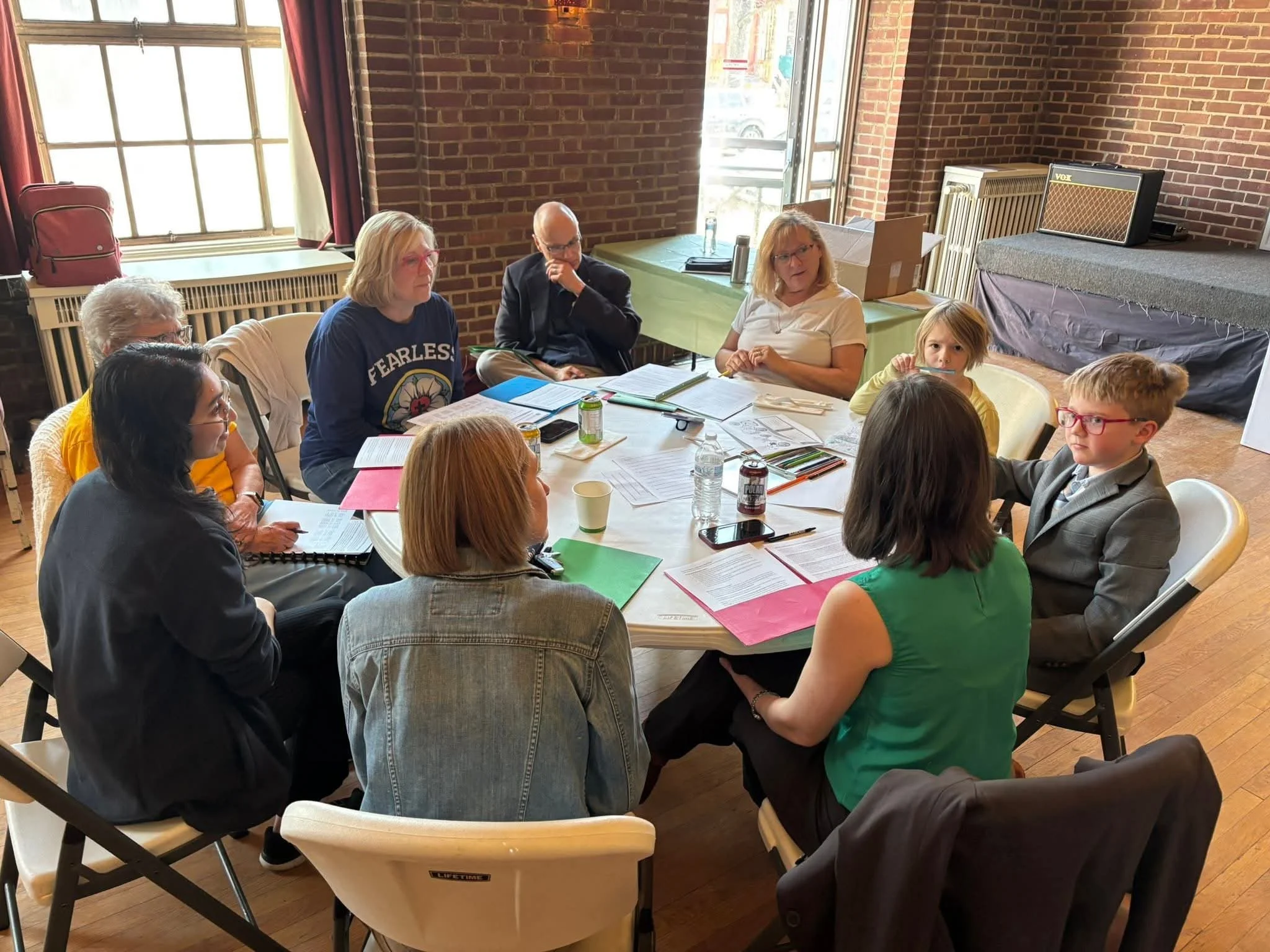
Committees and teams are various leadership groups who organize our work and foster ongoing conversations within the synod.
Synod Committees (ad hoc and standing) are constitutionally-designated groups that tend specific assignments within the corporate life of the synod as defined in the synod’s constitution, bylaws, and continuing resolutions.
Teams are the people who foster ongoing conversations around various aspects of how this synod serves God’s mission. They are oriented toward producing and implementing mission action plans resulting from imaginative missional conversations with congregations, parishes, and conferences in a fluid manner with tablemates who “come and go” over time.
Teams
Contact the Synod office to be connected with an existing team or table.
Advocacy Team
Disaster Response
Generosity Team
Global Ministry Team
Healthy Systems Team
Synod Assembly Planning Team
WELCA Board
World Hunger Team
Committees
Click a committee for more information.
Committee on Discipline
The Committee on Discipline is one of several committees required in all synods. The authorization for this committee is found in †S11.03. of the synod’s constitution and bylaws.
This committee consists of 12 persons—six lay persons and six rostered ministers, elected by the Synod Assembly for a term of 6 years. Each member may serve only one term. The functions of the Committee on Discipline are set forth in Chapter 20 of the Constitution, Bylaws, and Continuing Resolutions of the Evangelical Lutheran Church in America.
Some committee members are called upon in cases involving the discipline of a rostered person or a congregation. Persons who serve on this committee hope never to be called on to serve, but we want people who can listen well, think clearly, have the good of the whole church at heart and will discern fairly. It is good practice that no one who serves on the Committee on Discipline serves at the same time on the Committee on Consultation.
Consultation Committee
The Consultation Committee is one of several committees required in all synods. The authorization for this committee is found in †S11.02. in the Constitution of the Upstate New York Synod [adopted June 2017]. It is a group of people who assist the bishop by investigating complaints and recommending actions in an attempt to resolve issues that could lead to discipline of a rostered minister or a congregation as outlined in Chapter 20 of the Constitution, Bylaws and Continuing Resolutions of the Evangelical Lutheran Church in America.
The Committee committee consists of 6–12 persons who are elected by the Synod Assembly. One half of the persons are lay, the other one half are rostered ministers and serve for a single 6 year term. The bishop or the Synod Council, depending on the particulars of the case, select 5 persons from the 12 to serve as a Special Consultation Committee to consider a particular dispute.
Candidacy Committee
The Candidacy Committee’s primary role is to assess the candidates who seek to become rostered ministers.
Candidacy is a Spirit-led, highly collaborative process of discernment and formation, undertaken in the community of the Church. The Church, through the synod’s Candidacy Committee, expects to be actively involved in the decision-making that shapes a candidate’s formation process.
For more information, contact Julie Grindle, Associate to the Bishop for Candidacy, Roster Care, and Administration, at jgrindle@upstatenysynod.org or 812.345.2829
Finance Committee
The synod Finance Committee is made up of individuals who have a strong background in finances and financial trends. The Committee provides oversight and assistance to the synod treasurer and synod finance staff for such items as banking deposits and reconciliations, financial reports and budgets. Working together the treasurer, finance staff and the Committee draft an annual Mission Plan for consideration by the Synod Assembly each June. This Mission Plan document becomes a starting point to develop an annual budget for the upcoming year. The Mission Plan is based on trends of Mission Income received from the Upstate New York Synod member congregations and on actual costs to facilitate the operation of synod supported programs, ministries and operational expenses. The expenses and trends of these programs are monitored to ensure that there are adequate funds to pay expenses and that appropriate cash levels are maintained.
With input from the Synod Council the Mission Plan is modified into an annual budget that is presented to the Synod Council for approval. Once approved, the Finance Committee, treasurer and finance staff are responsible to ensure the mission income is being allocated in accordance with the annual budget. Since budgets need to be adjusted as income and/or expenses change, the Committee is charged to make responsible financial changes to the budget as necessary and to report these changes to the Synod Council. The Finance Committee usually meets quarterly, often communicating more frequently via email.
Constitution Committee
The Constitution Committee is established for the purpose of ensuring alignment of synod and congregation constitutions with the Constitutions, Bylaws and Continuing Resolutions of the Evangelical Lutheran Church in America and Church guidelines. Committee members annually review the constitution of the Upstate New York Synod, reviewing and recommending changes as appropriate to the Synod Council. Members of the Constitution Committee also serve as reviewers for congregation constitutions that are submitted to the synod for approval as per constitution guidelines.
The Constitution Committee consists of at least one member of the Synod Council and a minimum of 5 but not more than a maximum of 7 other persons appointed by the Bishop, to advise, review and make recommendations as appropriate to the Bishop and the Synod Council on constitutional matters.